The MANIAC is a 2023 novel by Chilean author Benjamín Labatut, written in English. It is a fictionalised biography of polymath John von Neumann, whom Labatut calls "the smartest human being of the 20th century". The book focuses on von Neumann, but is also about physicist Paul Ehrenfest, the history of artificial intelligence, and Lee Sedol's Go match against AlphaGo. The book received mostly positive reviews from critics. == Background == John von Neumann was a Jewish Hungarian-born polymath who was a prodigy from an early childhood. Von Neumann worked in multiple fields of science, theoretical (mathematical foundations of quantum mechanics, game theory, cellular automata) and applied (nuclear weapons research during the Manhattan Project in World War II, computer architecture later named after him, and many other subjects). Labatut calls him "the smartest human being of the 20th century". The title of the book is derived from an early computer based on von Neumann architecture, built after the war at Los Alamos laboratory, called MANIAC I. Benjamín Labatut is a Chilean author known for his 2020 book When We Cease to Understand the World, a collection of fictionalised stories about famous scientists that received positive reviews and was translated into multiple languages from Spanish. The MANIAC is Labatut's first book written in English. In an interview, Labatut said he prefers to write in English: English is my preferred form of thought. ... English is the language I do most if not all my reading it. And it is a far better language than Spanish, in so many ways. Writing "clean" prose in Spanish is almost impossible, because so many of its sounds clash. Borges said that he found English "a far finer language than Spanish" because it's both Germanic and Latin; because of its wonderful vocabulary ("Regal is not exactly the same thing as saying kingly," he explained); because of its physicality; and because you can do almost anything with verbs and prepositions. Labatut was inspired to write The MANIAC by George Dyson's book Turing's Cathedral. == Synopsis == The book has three chapters. The first chapter, "Paul or the Discovery of the Irrational", written in the third person, is about physicist Paul Ehrenfest. The chapter opens with Ehrenfest shooting dead his son Vassily, who suffered from Down syndrome, and then himself. It then recounts Ehrenfest's life story, describing his relationships with his wife Tatyana, his mistress Nelly Meyjes, and his eminent physicist colleagues. It chronicles his descent into despair and depression over his marriage's disintegration, the advent of quantum mechanics, and the direction Europe was heading in with the Nazi Party's rise to power in Germany, looping back to the initial scene of the chapter. The second chapter, "John or the Mad Dreams of Reason", is about John von Neumann, and is written as a series of interviews of his family members, wives, friends, and colleagues, each in a distinctive voice. It is divided into three parts. Part I, "The Limits of Logic", is about his early life, as told by von Neumann's childhood friend Eugene Wigner, mother Margrit Kann, brother Nicholas von Neumann, first wife Mariette Kövesi, and scientists Theodore von Karman, George Polya, and Gábor Szegő. It climaxes with von Neumann's participation in David Hilbert's program to create a logical basis for mathematics based on a consistent set of axioms, a quest ultimately scuppered by Kurt Gödel. Part II, "The Delicate Balance of Terror", discusses von Neumann's role in the Manhattan Project (as told by Richard Feynman); his development of game theory and the doctrine of mutual assured destruction (MAD) (as told by Oskar Morgenstern); and his creation of the MANIAC I computer and the von Neumann architecture (as told by Julian Bigelow). In Part III, "Ghosts in the Machine", Sydney Brenner discusses von Neumann's contributions to biology, his theoretical work on self-replicating and self-repairing machines, and his vision of Von Neumann probes exploring the universe. Nils Aall Barricelli talks about his ideas of digital life and his disagreements with von Neumann. Von Neumann's wife Klára Dán, daughter Marina, and Wigner talk about his final years, personal life, and death. The third chapter, "Lee or The Delusions of Artificial Intelligence", is about Lee Sedol's Go match against AlphaGo. The narrative reverts to the third person. The chapter also tells the story of Demis Hassabis, a chess prodigy in childhood who decided to work on artificial intelligence and founded DeepMind, the company behind AlphaGo. The way is pointed to the future, as artificial intelligence's growing capabilities outpace the human mind. The book ends with Lee Sedol's retirement from Go, and new version of DeepMind's program, AlphaZero, that did not train on human games but nevertheless became the strongest player in Go, chess, and Shogi. == Reception == The book received mostly positive reviews. In his review for The New York Times Tom McCarthy noted the ambiguity of genre: "At its best, as in the stunning opening sequence reconstructing the murder-suicide of the physicist Paul Ehrenfest and his disabled son, or in the final section's gripping account of a computer defeating the world's best human Go player, you just throw up your hands and think, Who cares what discourse label we assign this stuff? It's great." Becca Rothfeld of the Washington Post praised the book, writing that it is "Labatut's latest virtuosic effort, at once a historical novel and a philosophical foray": "The MANIAC is a work of dark, eerie and singular beauty." She noted that the book "can also be difficult to read" because of its unusual narrative structure: "The book is narrated by a cluttered polyphony of characters, among them both of von Neumann's wives and a number of his teachers and colleagues. ... Like von Neumann, The MANIAC strives to adopt the impartial standpoint of the universe." Killian Fox of The Guardian sees the book as "darkly fascinating novel", and notes Labatut's "impressive dexterity, unpicking complex ideas in long, elegant sentences that propel us forward at speed (this is his first book written in English). Even in the more feverish passages, when yet another great mind succumbs to madness, haunted by the spectres they've helped unleash on the world, he feels in full control of his material." Sam Byers of The Guardian praises the book and the author's style: "The opening chapter of Benjamín Labatut's second novel is such a perfect distillation of his technique that it could serve as a manifesto." and "Readers ... will recognise the sense of breathlessness his best writing can evoke. Seemingly loosened from the laws of physics they describe, his sentences range freely through time and space, connecting not only characters and events, but the delicate tissue of intellectual history, often with a lightness of touch that belies their underlying complexity." He writes on the narrative structure: "Through a cascade of staccato chapters, an ensemble of narrators offer their piecemeal insights." Byers adds that "a brilliant novel is not quite what we end up with" and sees the problem in the "diffusion": "Labatut simply spreads himself too thin. Too many years in too few pages; too many voices with far too little to distinguish them. Initially intriguing, the bite-size monologues quickly come to feel inadequate." Some reviewers did not see the book as a biography. In an essay for the Cleveland Review of Books, Ben Cosman juxtaposes the book with Christopher Nolan's biopic Oppenheimer, and writes that it "follows the development of artificial intelligence—first as an idea at the beginning of the twentieth century, and then as a practicality at the beginning of the twenty-first—through the lives of three men who faced it." He also compared the book's structure to "witness testimony". Another reviewer called the book "perfect for anyone thirsting for more nuclear anxiety after watching Oppenheimer". Garrett Biggs of the Chicago Review of Books writes of the book's style: "Labatut writes about scientists the way Roberto Bolaño writes about poets. They are near mythical figures, captured at the corner of the novel's eye. They become historical in the most fraught sense of the term: subject to rumor and speculation and, eventually, the novel's form inflates their personas into something so large they can only be understood as narrative, never known in any objective capacity." Biggs criticises the last chapter: "the story of artificial intelligence has yet to be written. And so when Labatut's narration editorializes about artificial intelligence as 'a future that inspires hope and horror,' The MANIAC disassembles as a novel and starts to sound like a stale thinkpiece. AlphaGo might represent the first glimmer of a true artificial intelligence, as Labatut suggests. It also could one day be considered nothing more than a souped-up cousin to IBM's DeepBlue.
Period-tracking app
Period-tracking apps are mobile applications used to track the menstrual cycle. They may be used to predict menstruation, to plan fertility, and to track health. Examples include Clue, Glow, and Flo. == Function == Users enter their dates of menstruation, and frequently other experiences such as vaginal discharge and spotting; premenstrual syndrome; changes in mood; menstrual cramps and other pain; and other symptoms such as appetite changes, bloating, and acne. The apps predict the date of users' next period, and often also their ovulation and fertile window. Some apps have additional features such as contraceptive reminders, educational content, tracking modes for use during pregnancy, or the ability to share one's menstrual cycle data with a partner. == Privacy == Period-tracking apps collect personal health data, potentially raising concerns about privacy. Researchers have warned that data may be transferred to third parties and used for consumer profiling and targeted advertising, used for employment and health insurance discrimination, or used to prosecute users for seeking abortions. After the 2022 decision by the United States Supreme Court to overturn Roe v. Wade, and the bans and restrictions on abortion in many US states that followed, many American women uninstalled the apps amidst fear that the data could be accessed by law enforcement and used to prosecute users. WIRED published a ranking of several period-tracking apps by data privacy.
Perceptron
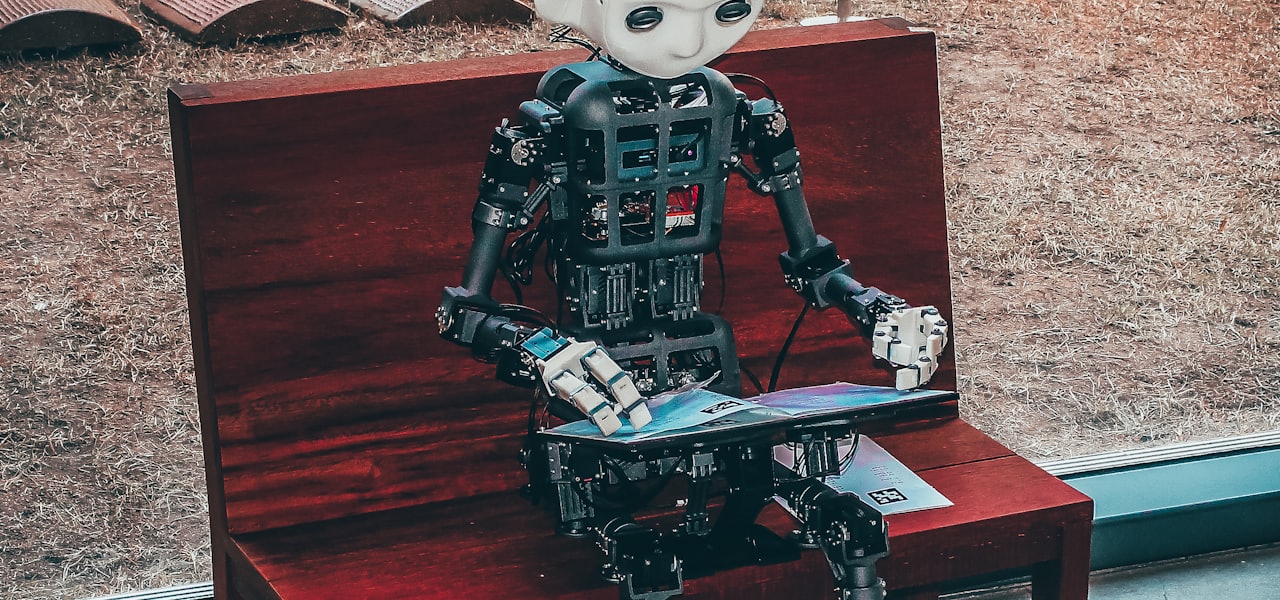
In machine learning, the perceptron is an algorithm for supervised learning of binary classifiers. A binary classifier is a function that can decide whether or not an input, represented by a vector of numbers, belongs to some specific class. It is a type of linear classifier, i.e. a classification algorithm that makes its predictions based on a linear predictor function combining a set of weights with the feature vector. == History == The artificial neuron and artificial neural network were invented in 1943 by Warren McCulloch and Walter Pitts in their seminal paper "A Logical Calculus of the Ideas Immanent in Nervous Activity". In 1957, Frank Rosenblatt was at the Cornell Aeronautical Laboratory. He simulated the perceptron on an IBM 704. Later, he obtained funding by the Information Systems Branch of the United States Office of Naval Research and the Rome Air Development Center, to build a custom-made computer, the Mark I Perceptron. It was first publicly demonstrated on 23 June 1960. The machine was "part of a previously secret four-year NPIC [the US' National Photographic Interpretation Center] effort from 1963 through 1966 to develop this algorithm into a useful tool for photo-interpreters". Rosenblatt described the details of the perceptron in a 1958 paper. His organization of a perceptron is constructed of three kinds of cells ("units"): S, A, R, which stand for "sensory", "association" and "response". He presented at the first international symposium on AI, Mechanisation of Thought Processes, which took place in 1958 November. Rosenblatt's project was funded under Contract Nonr-401(40) "Cognitive Systems Research Program", which lasted from 1959 to 1970, and Contract Nonr-2381(00) "Project PARA" ("PARA" means "Perceiving and Recognition Automata"), which lasted from 1957 to 1963. In 1959, the Institute for Defense Analysis awarded his group a $10,000 contract. By September 1961, the ONR awarded further $153,000 worth of contracts, with $108,000 committed for 1962. The ONR research manager, Marvin Denicoff, stated that ONR, instead of ARPA, funded the Perceptron project, because the project was unlikely to produce technological results in the near or medium term. Funding from ARPA go up to the order of millions dollars, while from ONR are on the order of 10,000 dollars. Meanwhile, the head of IPTO at ARPA, J.C.R. Licklider, was interested in 'self-organizing', 'adaptive' and other biologically-inspired methods in the 1950s; but by the mid-1960s he was openly critical of these, including the perceptron. Instead he strongly favored the logical AI approach of Simon and Newell. === Mark I Perceptron machine === The perceptron was intended to be a machine, rather than a program, and while its first implementation was in software for the IBM 704, it was subsequently implemented in custom-built hardware as the Mark I Perceptron with the project name "Project PARA", designed for image recognition. The machine is currently in Smithsonian National Museum of American History. The Mark I Perceptron had three layers. One version was implemented as follows: An array of 400 photocells arranged in a 20x20 grid, named "sensory units" (S-units), or "input retina". Each S-unit can connect to up to 40 A-units. A hidden layer of 512 perceptrons, named "association units" (A-units). An output layer of eight perceptrons, named "response units" (R-units). Rosenblatt called this three-layered perceptron network the alpha-perceptron, to distinguish it from other perceptron models he experimented with. The S-units are connected to the A-units randomly (according to a table of random numbers) via a plugboard (see photo), to "eliminate any particular intentional bias in the perceptron". The connection weights are fixed, not learned. Rosenblatt was adamant about the random connections, as he believed the retina was randomly connected to the visual cortex, and he wanted his perceptron machine to resemble human visual perception. The A-units are connected to the R-units, with adjustable weights encoded in potentiometers, and weight updates during learning were performed by electric motors.The hardware details are in an operators' manual. In a 1958 press conference organized by the US Navy, Rosenblatt made statements about the perceptron that caused a heated controversy among the fledgling AI community; based on Rosenblatt's statements, The New York Times reported the perceptron to be "the embryo of an electronic computer that [the Navy] expects will be able to walk, talk, see, write, reproduce itself and be conscious of its existence." The Photo Division of Central Intelligence Agency, from 1960 to 1964, studied the use of Mark I Perceptron machine for recognizing militarily interesting silhouetted targets (such as planes and ships) in aerial photos. === Principles of Neurodynamics (1962) === Rosenblatt described his experiments with many variants of the Perceptron machine in a book Principles of Neurodynamics (1962). The book is a published version of the 1961 report. Among the variants are: "cross-coupling" (connections between units within the same layer) with possibly closed loops, "back-coupling" (connections from units in a later layer to units in a previous layer), four-layer perceptrons where the last two layers have adjustable weights (and thus a proper multilayer perceptron), incorporating time-delays to perceptron units, to allow for processing sequential data, analyzing audio (instead of images). The machine was shipped from Cornell to Smithsonian in 1967, under a government transfer administered by the Office of Naval Research. === Perceptrons (1969) === Although the perceptron initially seemed promising, it was quickly proved that perceptrons could not be trained to recognise many classes of patterns. This caused the field of neural network research to stagnate for many years, before it was recognised that a feedforward neural network with two or more layers (also called a multilayer perceptron) had greater processing power than perceptrons with one layer (also called a single-layer perceptron). Single-layer perceptrons are only capable of learning linearly separable patterns. For a classification task with some step activation function, a single node will have a single line dividing the data points forming the patterns. More nodes can create more dividing lines, but those lines must somehow be combined to form more complex classifications. A second layer of perceptrons, or even linear nodes, are sufficient to solve many otherwise non-separable problems. In 1969, a famous book entitled Perceptrons by Marvin Minsky and Seymour Papert showed that it was impossible for these classes of network to learn an XOR function. It is often incorrectly believed that they also conjectured that a similar result would hold for a multi-layer perceptron network. However, this is not true, as both Minsky and Papert already knew that multi-layer perceptrons were capable of producing an XOR function. (See the page on Perceptrons (book) for more information.) Nevertheless, the often-miscited Minsky and Papert text caused a significant decline in interest and funding of neural network research. It took ten more years until neural network research experienced a resurgence in the 1980s. This text was reprinted in 1987 as "Perceptrons - Expanded Edition" where some errors in the original text are shown and corrected. === Subsequent work === Rosenblatt continued working on perceptrons despite diminishing funding. The last attempt was Tobermory, built between 1961 and 1967, built for speech recognition. It occupied an entire room. It had 4 layers with 12,000 weights implemented by toroidal magnetic cores. By the time of its completion, simulation on digital computers had become faster than purpose-built perceptron machines. He died in a boating accident in 1971. A simulation program for neural networks was written for IBM 7090/7094, and was used to study various pattern recognition applications, such as character recognition, particle tracks in bubble-chamber photographs; phoneme, isolated word, and continuous speech recognition; speaker verification; and center-of-attention mechanisms for image processing. The kernel perceptron algorithm was already introduced in 1964 by Aizerman et al. Margin bounds guarantees were given for the Perceptron algorithm in the general non-separable case first by Freund and Schapire (1998), and more recently by Mohri and Rostamizadeh (2013) who extend previous results and give new and more favorable L1 bounds. The perceptron is a simplified model of a biological neuron. While the complexity of biological neuron models is often required to fully understand neural behavior, research suggests a perceptron-like linear model can produce some behavior seen in real neurons. The solution spaces of decision boundaries for all binary functions and learning behaviors are studied in. == Definition == In the modern sense, the perceptron is an algori
One-shot learning (computer vision)
One-shot learning is an object categorization problem, found mostly in computer vision. Whereas most machine learning-based object categorization algorithms require training on hundreds or thousands of examples, one-shot learning aims to classify objects from one, or only a few, examples. The term few-shot learning is also used for these problems, especially when more than one example is needed. == Motivation == The ability to learn object categories from few examples, and at a rapid pace, has been demonstrated in humans. It is estimated that a child learns almost all of the 10 ~ 30 thousand object categories in the world by age six. This is due not only to the human mind's computational power, but also to its ability to synthesize and learn new object categories from existing information about different, previously learned categories. Given two examples from two object categories: one, an unknown object composed of familiar shapes, the second, an unknown, amorphous shape; it is much easier for humans to recognize the former than the latter, suggesting that humans make use of previously learned categories when learning new ones. The key motivation for solving one-shot learning is that systems, like humans, can use knowledge about object categories to classify new objects. == Background == As with most classification schemes, one-shot learning involves three main challenges: Representation: How should objects and categories be described? Learning: How can such descriptions be created? Recognition: How can a known object be filtered from enveloping clutter, irrespective of occlusion, viewpoint, and lighting? One-shot learning differs from single object recognition and standard category recognition algorithms in its emphasis on knowledge transfer, which makes use of previously learned categories. Model parameters: Reuses model parameters, based on the similarity between old and new categories. Categories are first learned on numerous training examples, then new categories are learned using transformations of model parameters from those initial categories or selecting relevant parameters for a classifier. Feature sharing: Shares parts or features of objects across categories. One algorithm extracts "diagnostic information" in patches from already learned categories by maximizing the patches' mutual information, and then applies these features to the learning of a new category. A dog category, for example, may be learned in one shot from previous knowledge of horse and cow categories, because dog objects may contain similar distinguishing patches. Contextual information: Appeals to global knowledge of the scene in which the object appears. Such global information can be used as frequency distributions in a conditional random field framework to recognize objects. Alternatively context can consider camera height and scene geometry. Algorithms of this type have two advantages. First, they learn object categories that are relatively dissimilar; and second, they perform well in ad hoc situations where an image has not been hand-cropped and aligned. == Theory == The Bayesian one-shot learning algorithm represents the foreground and background of images as parametrized by a mixture of constellation models. During the learning phase, the parameters of these models are learned using a conjugate density parameter posterior and variational Bayesian expectation–maximization (VBEM). In this stage the previously learned object categories inform the choice of model parameters via transfer by contextual information. For object recognition on new images, the posterior obtained during the learning phase is used in a Bayesian decision framework to estimate the ratio of p(object | test, train) to p(background clutter | test, train) where p is the probability of the outcome. === Bayesian framework === Given the task of finding a particular object in a query image, the overall objective of the Bayesian one-shot learning algorithm is to compare the probability that object is present vs the probability that only background clutter is present. If the former probability is higher, the algorithm reports the object's presence, otherwise the algorithm reports its absence. To compute these probabilities, the object class must be modeled from a set of (1 ~ 5) training images containing examples. To formalize these ideas, let I {\displaystyle I} be the query image, which contains either an example of the foreground category O f g {\displaystyle O_{fg}} or only background clutter of a generic background category O b g {\displaystyle O_{bg}} . Also let I t {\displaystyle I_{t}} be the set of training images used as the foreground category. The decision of whether I {\displaystyle I} contains an object from the foreground category, or only clutter from the background category is: R = p ( O f g | I , I t ) p ( O b g | I , I t ) = p ( I | I t , O f g ) p ( O f g ) p ( I | I t , O b g ) p ( O b g ) , {\displaystyle R={\frac {p(O_{fg}|I,I_{t})}{p(O_{bg}|I,I_{t})}}={\frac {p(I|I_{t},O_{fg})p(O_{fg})}{p(I|I_{t},O_{bg})p(O_{bg})}},} where the class posteriors p ( O f g | I , I t ) {\displaystyle p(O_{fg}|I,I_{t})} and p ( O b g | I , I t ) {\displaystyle p(O_{bg}|I,I_{t})} have been expanded by Bayes' theorem, yielding a ratio of likelihoods and a ratio of object category priors. We decide that the image I {\displaystyle I} contains an object from the foreground class if R {\displaystyle R} exceeds a certain threshold T {\displaystyle T} . We next introduce parametric models for the foreground and background categories with parameters θ {\displaystyle \theta } and θ b g {\displaystyle \theta _{bg}} respectively. This foreground parametric model is learned during the learning stage from I t {\displaystyle I_{t}} , as well as prior information of learned categories. The background model we assume to be uniform across images. Omitting the constant ratio of category priors, p ( O f g ) p ( O b g ) {\displaystyle {\frac {p(O_{fg})}{p(O_{bg})}}} , and parametrizing over θ {\displaystyle \theta } and θ b g {\displaystyle \theta _{bg}} yields R ∝ ∫ p ( I | θ , O f g ) p ( θ | I t , O f g ) d θ ∫ p ( I | θ b g , O b g ) p ( θ b g | I t , O b g ) d θ b g = ∫ p ( I | θ ) p ( θ | I t , O f g ) d θ ∫ p ( I | θ b g ) p ( θ b g | I t , O b g ) d θ b g {\displaystyle R\propto {\frac {\int {p(I|\theta ,O_{fg})p(\theta |I_{t},O_{fg})}d\theta }{\int {p(I|\theta _{bg},O_{bg})p(\theta _{bg}|I_{t},O_{bg})}d\theta _{bg}}}={\frac {\int {p(I|\theta )p(\theta |I_{t},O_{fg})}d\theta }{\int {p(I|\theta _{bg})p(\theta _{bg}|I_{t},O_{bg})}d\theta _{bg}}}} , having simplified p ( I | θ , O f g ) {\displaystyle p(I|\theta ,O_{fg})} and p ( I | θ , O b g ) {\displaystyle p(I|\theta ,O_{bg})} to p ( I | θ f g ) {\displaystyle p(I|\theta _{fg})} and p ( I | θ b g ) . {\displaystyle p(I|\theta _{bg}).} The posterior distribution of model parameters given the training images, p ( θ | I t , O f g ) {\displaystyle p(\theta |I_{t},O_{fg})} is estimated in the learning phase. In this estimation, one-shot learning differs sharply from more traditional Bayesian estimation models that approximate the integral as δ ( θ M L ) {\displaystyle \delta (\theta ^{ML})} . Instead, it uses a variational approach using prior information from previously learned categories. However, the traditional maximum likelihood estimation of the model parameters is used for the background model and the categories learned in advance through training. === Object category model === For each query image I {\displaystyle I} and training images I t {\displaystyle I_{t}} , a constellation model is used for representation. To obtain this model for a given image I {\displaystyle I} , first a set of N interesting regions is detected in the image using the Kadir–Brady saliency detector. Each region selected is represented by a location in the image, X i {\displaystyle X_{i}} and a description of its appearance, A i {\displaystyle A_{i}} . Letting X = ∑ i = 1 N X i , A = ∑ i = 1 N A i {\displaystyle X=\sum _{i=1}^{N}X_{i},A=\sum _{i=1}^{N}A_{i}} and X t {\displaystyle X_{t}} and A t {\displaystyle A_{t}} the analogous representations for training images, the expression for R becomes: R ∝ ∫ p ( X , A | θ , O f g ) p ( θ | X t , A t , O f g ) d θ ∫ p ( X , A | θ b g , O b g ) p ( θ b g | X t , A t , O b g ) d θ b g = ∫ p ( X , A | θ ) p ( θ | X t , A t , O f g ) d θ ∫ p ( X , A | θ b g ) p ( θ b g | X t , A t , O b g ) d θ b g {\displaystyle R\propto {\frac {\int {p(X,A|\theta ,O_{fg})p(\theta |X_{t},A_{t},O_{fg})}d\theta }{\int {p(X,A|\theta _{bg},O_{bg})p(\theta _{bg}|X_{t},A_{t},O_{bg})}d\theta _{bg}}}={\frac {\int {p(X,A|\theta )p(\theta |X_{t},A_{t},O_{fg})}d\theta }{\int {p(X,A|\theta _{bg})p(\theta _{bg}|X_{t},A_{t},O_{bg})}\,d\theta _{bg}}}} The likelihoods p ( X , A | θ ) {\displaystyle p(X,A|\theta )} and p ( X , A | θ b g ) {\displaystyle p(X,A|\theta _{bg})} are represented as mixtures of constellation models. A typical constellation model has
Variable kernel density estimation
In statistics, adaptive or "variable-bandwidth" kernel density estimation is a form of kernel density estimation in which the size of the kernels used in the estimate are varied depending upon either the location of the samples or the location of the test point. It is a particularly effective technique when the sample space is multi-dimensional. == Rationale == Given a set of samples, { x → i } {\displaystyle \lbrace {\vec {x}}_{i}\rbrace } , we wish to estimate the density, P ( x → ) {\displaystyle P({\vec {x}})} , at a test point, x → {\displaystyle {\vec {x}}} : P ( x → ) ≈ W n h D {\displaystyle P({\vec {x}})\approx {\frac {W}{nh^{D}}}} W = ∑ i = 1 n w i {\displaystyle W=\sum _{i=1}^{n}w_{i}} w i = K ( x → − x → i h ) {\displaystyle w_{i}=K\left({\frac {{\vec {x}}-{\vec {x}}_{i}}{h}}\right)} where n is the number of samples, K is the "kernel", h is its width and D is the number of dimensions in x → {\displaystyle {\vec {x}}} . The kernel can be thought of as a simple, linear filter. Using a fixed filter width may mean that in regions of low density, all samples will fall in the tails of the filter with very low weighting, while regions of high density will find an excessive number of samples in the central region with weighting close to unity. To fix this problem, we vary the width of the kernel in different regions of the sample space. There are two methods of doing this: balloon and pointwise estimation. In a balloon estimator, the kernel width is varied depending on the location of the test point. In a pointwise estimator, the kernel width is varied depending on the location of the sample. For multivariate estimators, the parameter, h, can be generalized to vary not just the size, but also the shape of the kernel. This more complicated approach will not be covered here. == Balloon estimators == A common method of varying the kernel width is to make it inversely proportional to the density at the test point: h = k [ n P ( x → ) ] 1 / D {\displaystyle h={\frac {k}{\left[nP({\vec {x}})\right]^{1/D}}}} where k is a constant. If we back-substitute the estimated PDF, and assuming a Gaussian kernel function, we can show that W is a constant: W = k D ( 2 π ) D / 2 {\displaystyle W=k^{D}(2\pi )^{D/2}} A similar derivation holds for any kernel whose normalising function is of the order hD, although with a different constant factor in place of the (2 π)D/2 term. This produces a generalization of the k-nearest neighbour algorithm. That is, a uniform kernel function will return the KNN technique. There are two components to the error: a variance term and a bias term. The variance term is given as: e 1 = P ∫ K 2 n h D {\displaystyle e_{1}={\frac {P\int K^{2}}{nh^{D}}}} . The bias term is found by evaluating the approximated function in the limit as the kernel width becomes much larger than the sample spacing. By using a Taylor expansion for the real function, the bias term drops out: e 2 = h 2 n ∇ 2 P {\displaystyle e_{2}={\frac {h^{2}}{n}}\nabla ^{2}P} An optimal kernel width that minimizes the error of each estimate can thus be derived. == Use for statistical classification == The method is particularly effective when applied to statistical classification. There are two ways we can proceed: the first is to compute the PDFs of each class separately, using different bandwidth parameters, and then compare them as in Taylor. Alternatively, we can divide up the sum based on the class of each sample: P ( j , x → ) ≈ 1 n ∑ i = 1 , c i = j n w i {\displaystyle P(j,{\vec {x}})\approx {\frac {1}{n}}\sum _{i=1,c_{i}=j}^{n}w_{i}} where ci is the class of the ith sample. The class of the test point may be estimated through maximum likelihood.
SWILE
SWILE (formerly: Lunchr) is a French app-based company that focuses on improving the employee experience. Among others, the platform offers meal vouchers, gift vouchers, mobility vouchers, and business travel solutions. In March 2020, it was renamed SWILE and entered the lunch break and meal voucher market. == History == The company was founded as Lunchr by Loïc Soubeyrand in 2016. Originally, Lunchr was an app for pre-ordering lunch on the spot or to go. In January 2017, the company raised €2.5 million in seed funding from Daphni. In 2018, the company raised €11 million (series A) from Idinvest, followed by another €30 million in February 2019 (series B), notably from Index Ventures and Kima Ventures. In January 2020, Lunchr became one of the first startups to join the French Tech 120. A few months later, in March, Lunchr diversified its services, adding team life management tools and changing its brand name to Swile. In June 2020, the company raised €70 million more in a new round of financing (Series C) from the same investors and the BPI. In November 2020, Swile acquired Briq, a startup specializing in employee engagement. In January 2021, Swile won a tender with Carrefour and distributed 62,000 Swile cards to its employees. In early October 2021, a new $200 million (€175 million) fundraising round, in which Japanese Softbank joined other investors, allowed Swile to capitalize on $1 billion. President Emmanuel Macron cited the company as "a further proof that FrenchTech is at the forefront internationally." In May 2022, the company acquired the travel management start-up Okarito for €6 million. == Overview == Swile operates in two countries (France and Brazil) and has a total of 1000 employees, 5.5 million users and 85,000 corporate customers, including Carrefour, Le Monde, JCDECAUX, PSG, Airbnb, Spotify, Red Bull, and TikTok in the private sector, as well as numerous local authorities and ministerial references in the public sector.
Generalized blockmodeling of valued networks
Generalized blockmodeling of valued networks is an approach of the generalized blockmodeling, dealing with valued networks (e.g., non-binary). While the generalized blockmodeling signifies a "formal and integrated approach for the study of the underlying functional anatomies of virtually any set of relational data", it is in principle used for binary networks. This is evident from the set of ideal blocks, which are used to interpret blockmodels, that are binary, based on the characteristic link patterns. Because of this, such templates are "not readily comparable with valued empirical blocks". To allow generalized blockmodeling of valued directional (one-mode) networks (e.g. allowing the direct comparisons of empirical valued blocks with ideal binary blocks), a non–parametric approach is used. With this, "an optional parameter determines the prominence of valued ties as a minimum percentile deviation between observed and expected flows". Such two–sided application of parameter then introduces "the possibility of non–determined ties, i.e. valued relations that are deemed neither prominent (1) nor non–prominent (0)." Resulted occurrences of links then motivate the modification of the calculation of inconsistencies between empirical and ideal blocks. At the same time, such links also give a possibility to measure the interpretational certainty, which is specific to each ideal block. Such maximum two–sided deviation threshold, holding the aggregate uncertainty score at zero or near–zero levels, is then proposed as "a measure of interpretational certainty for valued blockmodels, in effect transforming the optional parameter into an outgoing state". Problem with blockmodeling is the standard set of ideal block, as they are all specified using binary link (tie) patters; this results in "a non–trivial exercise to match and count inconsistencies between such ideal binary ties and empirical valued ties". One approach to solve this is by using dichotomization to transform the network into a binary version. The other two approaches were first proposed by Aleš Žiberna in 2007 by introducing valued (generalized) blockmodeling and also homogeneity blockmodeling. The basic idea of the latter is "that the inconsistency of an empirical block with its ideal block can be measured by within block variability of appropriate values". The newly–formed ideal blocks, which are appropriate for blockmodeling of valued networks, are then presented together with the definitions of their block inconsistencies. Two other approaches were later suggested by Carl Nordlund in 2019: deviational approach and correlation-based generalized approach. Both Nordlund's approaches are based on the idea, that valued networks can be compared with the ideal block without values. With this approach, more information is retained for analysis, which also means, that there are fewer partitions having identical values of the criterion function. This means, that the generalized blockmodeling of valued networks measures the inconsistencies more precisely. Usually, only one optimal partition is found in this approach, especially when it is used by homogeneity blockmodeling. Contrary, while using binary blockmodeling on the same sample, usually more than one optimal partition had occurred on several occasions.